Board and flute
E-flute, B-flute, C-flute or BC double-wall, plus kraft or test liner. Paperboard caliper in μm or pt if the packer already measured a sample.
PROCUREMENT NOTE / FIRST ORDER
Compare quotes from up to 3 factories
FREE basic specification and sourcing-requirements review
Eligible first orders may receive up to 3%
Eligibility applies to qualified business buyers and is confirmed after we review your product, quantity, destination, and sourcing requirements. Final savings depend on supplier confirmation, product type and order value.
Spec Review
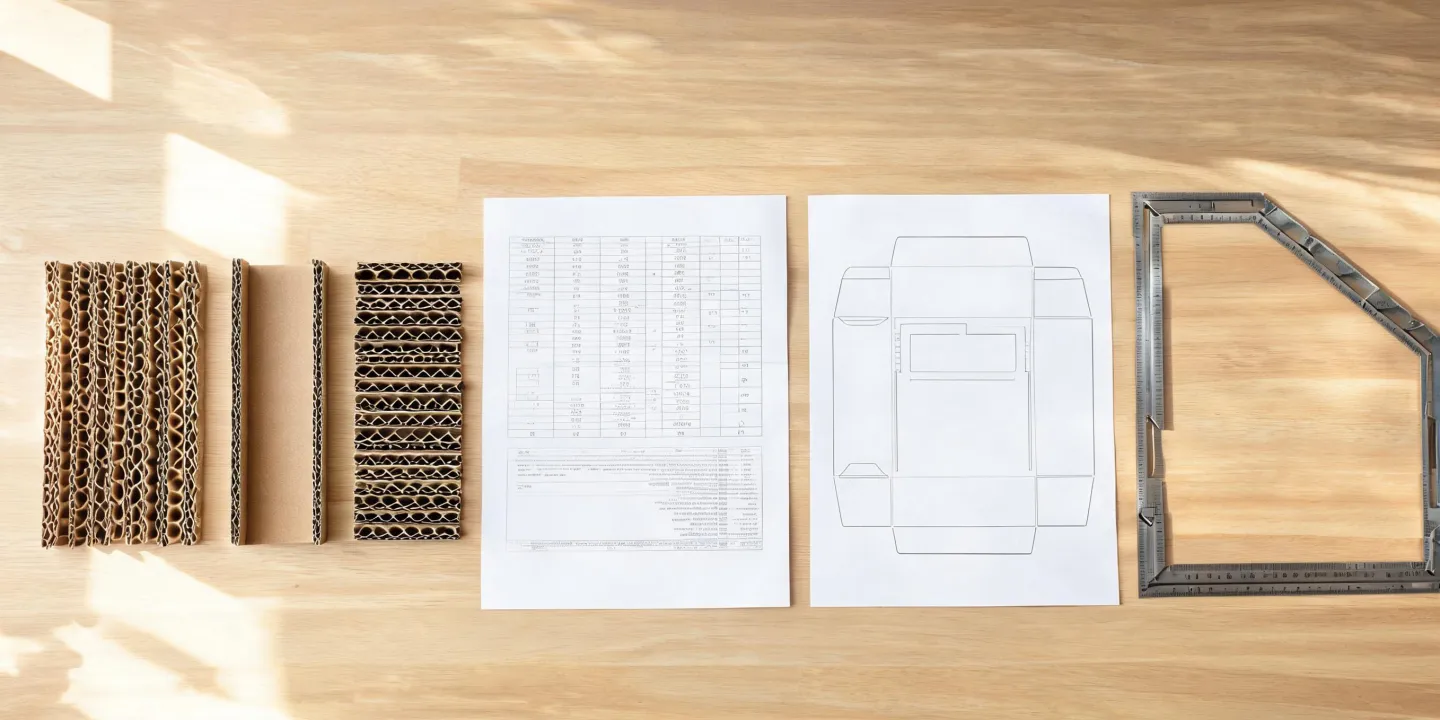
Use this page to close open choices on a custom corrugated box before treating two factory replies as comparable. The layout is a review path: statement, open items, completeness bars and the documents to request. It is not an ESG or carbon page.
A quote is comparable only when flute profile, strength method, inside dimensions, print revision, quantity unit and destination are written the same way. An alternative construction is not accepted until the buyer records why the flute, die or board may change.
E-flute, B-flute, C-flute or BC double-wall, plus kraft or test liner. Paperboard caliper in μm or pt if the packer already measured a sample.
Edge crush test (example: 32 ECT single-wall RSC) or burst (example: 275 lb double-wall). The method must appear on every reply.
Color count, flexographic printing versus a digital short run, and the die line revision the plate or die was cut from.
These bars are a buyer checklist, not factory capacity and not a carbon target.
Short SKU counts and frequent artwork changes can reduce plate cost with digital print. Stable long runs often keep unit cost and spot color control on flexographic printing. The brief should state expected reprint frequency so factories do not hide plate amortization inside a piece price.
If a factory offers another flute or board, record why the die, pack-out or stack path still holds. Then split the inquiry options or send the brief.
Request Factory Quotes